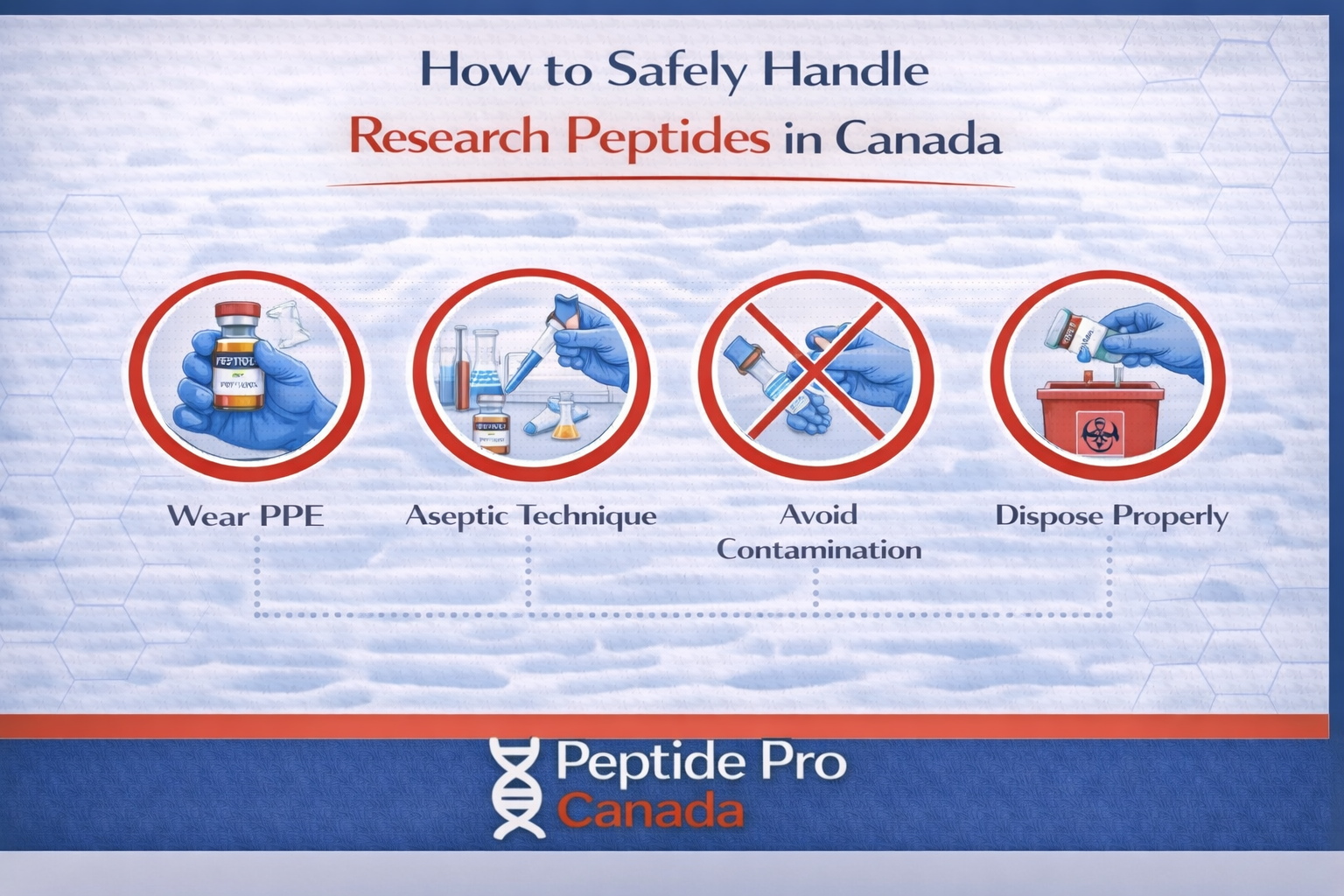
How to Safely Handle Research Peptides in Canada
Safely handle research peptides by treating every material as a laboratory reagent with specific documentation, storage requirements, and handling considerations. Proper procedures help protect personnel, preserve sample integrity, prevent cross-contamination, and support reproducible results.
This article provides general laboratory-safety information only. Researchers must follow their institution’s approved procedures, applicable workplace requirements, product documentation, and material-specific risk assessments.
How to Safely Handle Research Peptides
There is no single procedure appropriate for every research peptide. The correct approach depends on the material’s documented properties, quantity, physical form, intended analytical work, and laboratory environment.
Before beginning work, researchers should review the product label, batch documentation, available safety information, institutional procedures, and storage requirements.
1. Review the Material Before Handling
Begin by confirming exactly what material was received. Review:
- Product name and labelled quantity
- Lot or batch number
- Physical form and container condition
- Storage and handling information
- Certificate of Analysis
- Available technical or safety documentation
Do not handle a vial when its identity is unclear, the label is unreadable, or the container appears damaged. Contact the supplier and document the issue before proceeding.
Batch documentation can be reviewed through our Certificates of Analysis page. Always confirm that the report corresponds to the lot or batch being studied.
2. Complete a Laboratory Risk Assessment
A laboratory should evaluate potential hazards before work begins. Consider the material’s known or unknown properties, the amount being handled, possible exposure routes, the equipment being used, and the consequences of an accidental release.
The Canadian Centre for Occupational Health and Safety recommends identifying hazards, assessing risks, selecting appropriate controls, and evaluating whether those controls remain effective. Review the CCOHS guidance on controlling exposure to hazardous chemicals for general Canadian workplace-safety information.
If adequate safety information is unavailable, the laboratory should use a cautious approach and obtain guidance from its safety officer or qualified supervisor.
3. Select Appropriate Personal Protective Equipment
Personal protective equipment should be selected according to the laboratory’s risk assessment rather than assumed to be identical for every material.
Depending on the work, appropriate protection may include:
- A properly fitted laboratory coat or protective garment
- Gloves selected for the identified hazards
- Safety glasses, goggles, or other eye protection
- Closed-toe footwear
- Additional controls required by the laboratory’s procedures
Inspect protective equipment before use and replace damaged or contaminated items. Gloves do not eliminate the need for handwashing, clean technique, or appropriate engineering controls.
4. Prepare a Clean and Controlled Workspace
Before opening or moving a research material:
- Clear unnecessary items from the work area.
- Confirm that the surface is clean and dry.
- Gather all required equipment before beginning.
- Keep food, drinks, cosmetics, and personal belongings outside the work area.
- Use dedicated tools when required to prevent cross-contamination.
- Confirm that suitable waste and spill materials are available.
Airflow, vibration, clutter, and uncontrolled movement can affect small quantities of dry laboratory material. Work should be performed in the facility and equipment specified by the laboratory’s approved procedure.
5. Protect the Material From Contamination and Degradation
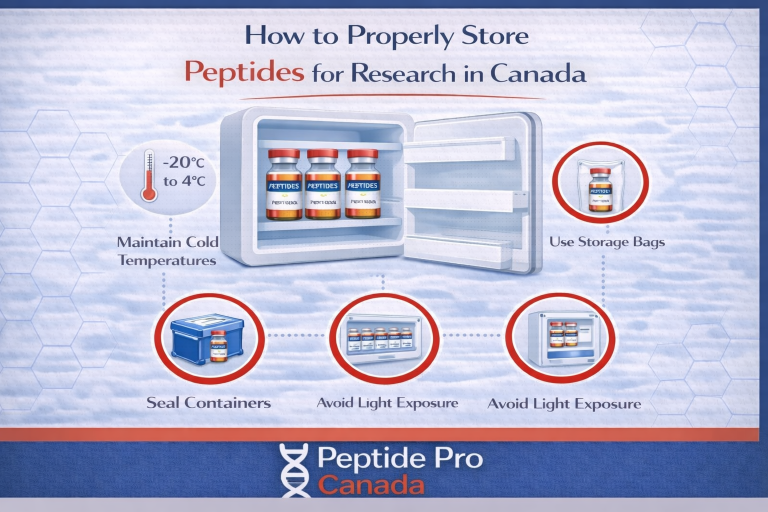
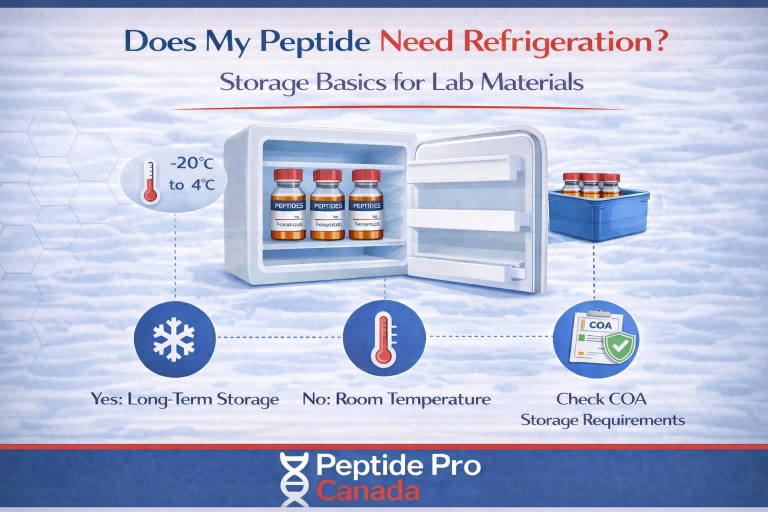
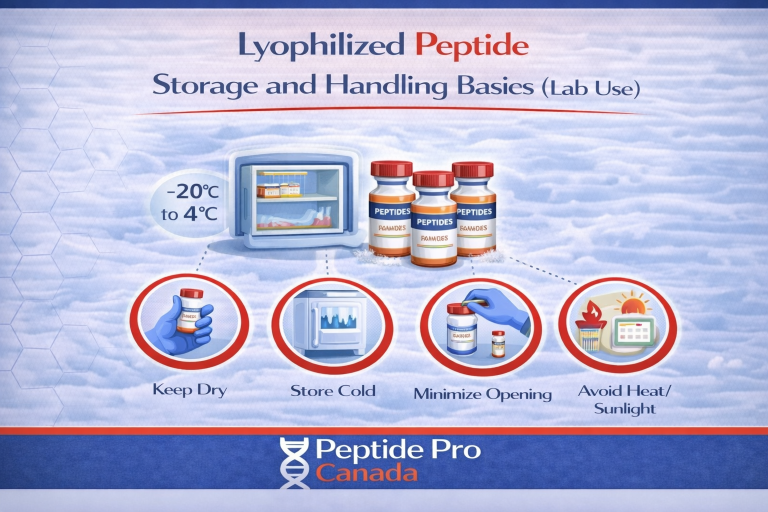
Moisture, heat, light, contaminated equipment, and repeated temperature changes may affect some lyophilized research materials. Requirements vary by compound, so researchers should follow product-specific documentation rather than applying one rule to every peptide.
General precautions include:
- Keeping containers sealed until required
- Limiting unnecessary exposure to humid air
- Avoiding direct sunlight and uncontrolled heat
- Using clean, dry laboratory tools
- Reducing unnecessary movement between storage temperatures
- Returning materials to documented storage promptly
Read our guide to lyophilized peptide storage and handling for additional laboratory considerations.
6. Maintain Batch Traceability
Good records help connect experimental observations to the correct material. At minimum, record:
- Product name
- Lot or batch number
- Date received
- Container condition on arrival
- Storage location and conditions
- Dates and times of relevant handling events
- Personnel involved
- Corresponding analytical documentation
- Any unexpected observations or deviations
Never substitute a report from another batch without clearly documenting the difference. A Certificate of Analysis describes the tested sample or batch and is not a general guarantee for unrelated inventory.
7. Prepare for Spills, Damage, and Unexpected Events
Laboratories should have a documented response plan before an incident occurs. Personnel should know:
- How to secure and leave the affected area
- Who must be notified
- Where spill-response materials are located
- Which waste container is appropriate
- How exposure or damaged packaging must be documented
Do not attempt to clean an unknown or uncontrolled release unless you are trained, authorized, and equipped to do so. Follow the laboratory’s emergency procedures and seek assistance from the designated safety personnel.
Common Research Peptide Handling Mistakes
- Beginning work without confirming the product and batch number
- Assuming all peptides have identical storage requirements
- Using damaged or unreadable containers
- Opening cold material in an uncontrolled humid environment
- Working on a wet, cluttered, or contaminated surface
- Using the wrong protective equipment for the assessed hazard
- Separating a vial from its corresponding documentation
- Failing to record storage changes or handling deviations
- Attempting to manage a spill without appropriate training
Research-Use Restrictions
PeptidePro Canada products are supplied exclusively as laboratory research materials. They are not intended for human or veterinary use, consumption, injection, diagnosis, treatment, or any clinical application.
Handling instructions for laboratory materials must not be interpreted as personal-use, administration, or medical guidance. Review what “Research Use Only” means for additional information.
Frequently Asked Questions
Does every research peptide require the same PPE?
No. Protective equipment should be selected using the laboratory’s risk assessment, available safety information, material properties, quantity, and planned work.
Can appearance confirm peptide identity or purity?
No. Colour, texture, or lyophilized cake appearance cannot confirm identity, quantity, or purity. Appropriate analytical testing and batch documentation are required.
What should I do if a vial arrives damaged?
Do not use the material. Photograph the outer package, shipping label, internal packaging, vial, and visible damage. Keep all packaging and review our shipping and returns information before contacting support.
Why is batch traceability important?
Batch traceability connects the material, documentation, handling history, and experimental results. Without it, researchers may be unable to determine which material produced a particular observation.
Final Laboratory Checklist
Before beginning laboratory work, confirm that you can:
- Identify the material and batch
- Access the relevant documentation
- Confirm the required storage conditions
- Describe the assessed hazards
- Select the appropriate controls and protective equipment
- Maintain a clean and controlled workspace
- Record handling and storage events
- Respond appropriately to a spill or damaged container
Following these principles helps laboratories safely handle research peptides while protecting personnel, maintaining documentation, and preserving the integrity of scientific work.