The Legal Considerations for Using Peptides in Canada
Introduction: Understanding the Legal Framework for Peptides in Canada
The use of peptides in Canada, particularly in research and medical applications, has been growing in recent years. However, many researchers and consumers are unaware of the legal considerations surrounding peptides. This post will provide an overview of the legal framework for using peptides in Canada and help you navigate the rules and regulations that apply.
Health Canada’s Role in Regulating Peptides
Health Canada is the primary regulatory body responsible for ensuring that health products, including peptides, meet the safety and efficacy standards required for use in Canada. Peptides that are intended for medical or human use must go through the approval process set out by Health Canada, which includes clinical trials, safety assessments, and regulatory reviews.
For peptides used in research, the regulatory framework is slightly different. Peptides intended for research purposes are generally exempt from some of the stringent requirements for medical use, but they must still comply with Health Canada’s guidelines for controlled substances.
Legal Status of Peptides in Canada
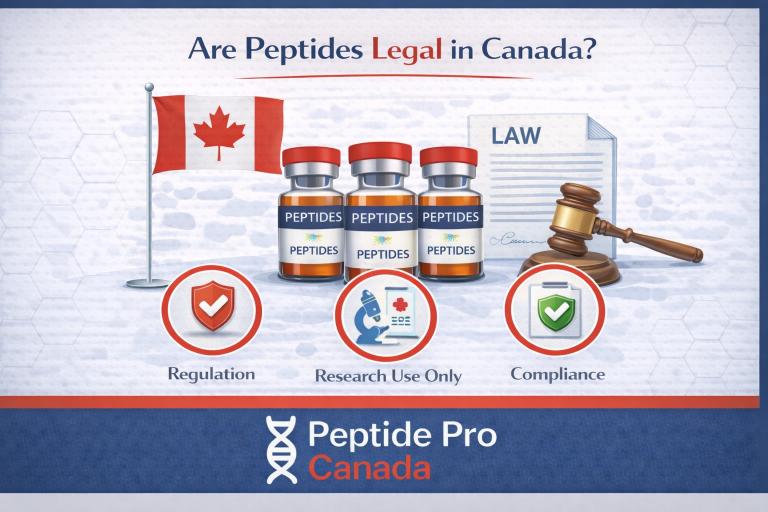
Peptides in Canada are considered drugs under the Food and Drugs Act and must be handled accordingly. However, the legal status of peptides varies depending on their intended use:
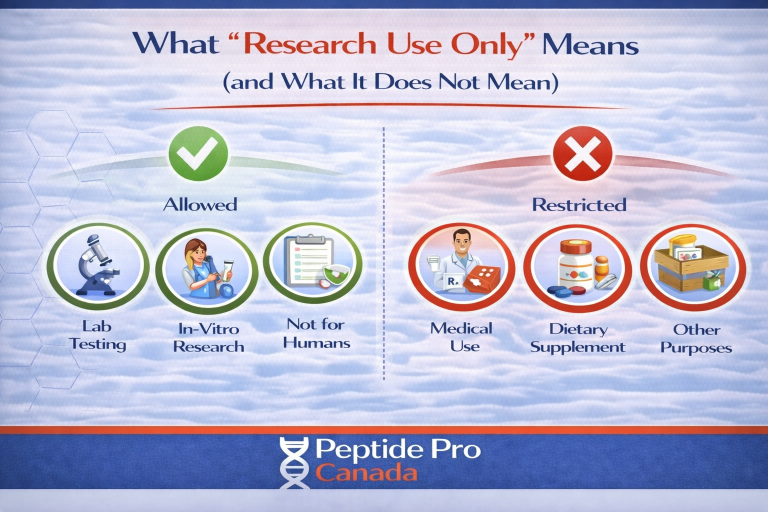
- For Research Use: Peptides intended solely for research purposes are allowed for purchase and use in research labs, as long as they are not marketed for human consumption. These peptides must be purchased from licensed suppliers.
- For Medical Use: Peptides that are intended for medical use must be approved by Health Canada and must meet all safety and efficacy standards. Peptides that are not approved for medical use cannot be legally sold or administered to patients.
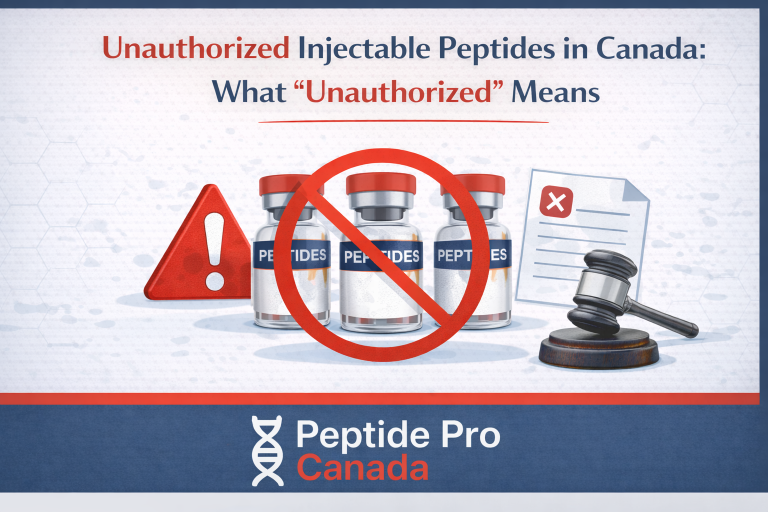
- Unauthorized Use: Any peptides that are not approved for either medical or research use and are being marketed or sold for human consumption are considered illegal and could result in legal action.
How to Stay Compliant
Researchers and consumers who use peptides in Canada must be aware of the legal implications of using unregulated or unauthorized peptides. To stay compliant:
- Only purchase peptides from licensed suppliers that provide Certificates of Analysis (COA) and adhere to Health Canada’s regulations.
- Ensure peptides are used strictly for research purposes or under a medical professional’s supervision if applicable.
- Avoid purchasing peptides from unregulated sources, as they may not meet safety standards and could pose legal risks.
Conclusion: Adhering to Legal Guidelines
Understanding the legal considerations for peptides in Canada is essential for staying compliant with Health Canada’s regulations. Whether you’re a researcher, medical professional, or consumer, it’s important to ensure that the peptides you use are legally obtained and used in accordance with Canadian law.
Disclaimer: This post is for informational purposes only and does not constitute legal advice. Always consult with legal professionals and Health Canada to ensure compliance when working with peptides.