What “Research Use Only” Means (and What It Does Not Mean)
If you run a research peptides Canada store, “Research Use Only” is not just a footer line. It’s the boundary that decides how your site reads to customers, platforms, and regulators. This post explains what the label means, what it does not mean, and how to keep your content in the research lane.
This is general information, not legal advice.
Quick answer
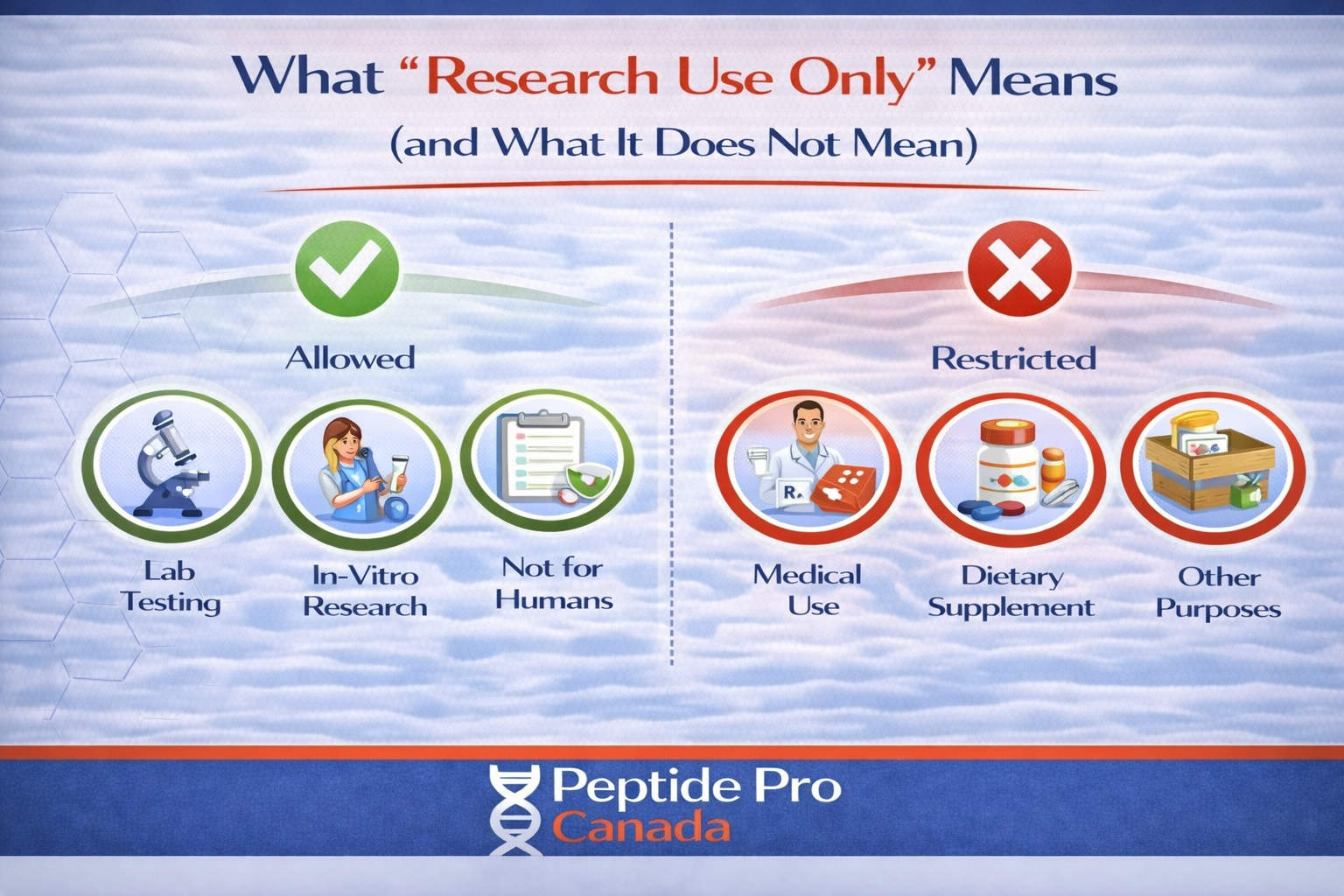
- Research Use Only means the product is intended for laboratory and analytical work, not personal use.
- It does not authorize a product for sale as a drug/health product in Canada.
- It does not protect you if the rest of your content reads like human-use marketing.
What “Research Use Only” means
In plain terms, “Research Use Only” is a positioning statement. It tells the reader the product is intended for research and laboratory activities. It should be consistent across your entire customer experience:
- homepage messaging
- product pages
- blog posts
- ads and social content
- customer support responses
What it does NOT mean
- It does not mean “safe for humans.”
- It does not mean “approved in Canada.”
- It does not mean you can publish outcome-based testimonials.
- It does not mean you can post dosing, injection, mixing, or “protocol” instructions.
Why wording matters in Canada
Health Canada’s definition of a “drug” is broad. If a substance is sold or represented for treating disease or changing body functions in humans, it can be treated as a drug. That’s why outcome language creates risk, even if the page says “research use only.”
If you want the official context, Health Canada also publishes guidance on how it distinguishes advertising (promotion) from other activities. That matters because blog posts, reviews you publish, and social content can still be promotional depending on the message and context.
- Health Canada: Distinction between advertising and other activities
- Health Canada: Regulatory requirements for advertising
The “consistency test” (simple way to keep your site compliant)
Ask one question: if someone screenshots this page, does it look like research supply content or personal-use marketing?
Research supply content looks like:
- COA documentation and how to read it
- batch/lot references (only if real)
- shipping timelines and packaging standards
- returns/replacements and damage policies
- lab handling and storage basics
Personal-use marketing looks like:
- “results” timelines
- weight loss, healing, recovery, performance, anti-aging
- before/after language
- instructions that read like dosing or personal protocols
- publishing testimonials that claim outcomes
Reviews and testimonials: the fastest way to create problems
Customer reviews feel harmless, but they can turn into promotion the moment they describe personal outcomes. If you publish reviews on your site:
- Approve: shipping experience, packaging, service, COA availability, ordering process.
- Reject or edit: anything describing outcomes, timelines, or personal use.
Content checklist for each page
- Does the page avoid outcome language?
- Does it avoid dosing, mixing, injection, “protocol,” or “cycle” instructions?
- Does it focus on documentation and process (COAs, shipping, policies)?
- Is the research-only boundary stated clearly near the top?
FAQ
Is “Research Use Only” a legal shield?
No. It helps set intent, but it doesn’t override how the product is represented or promoted.
Can blog posts count as promotion?
They can. If the post pushes human outcomes or reads like a personal-use guide, it may be treated as promotional.
What’s the safest content strategy for a research peptides Canada store?
Compliance explainers, COA education, lab handling basics, and customer-process posts (shipping, replacements, ordering steps).
Safe call to action
If you want documentation basics, start with our COA Help page and refer to the COA images on each product page (typically the second and third images).